



 Bridal ShowThe Aisle Bridal Show · Sunday, Oct 18 · Longleaf Event Center @ AMAG, Anniston · theaislebridalshows.comRegister free →
I played Sweeney Todd once, at twenty-three, on a college stage in a steampunk coat, before I understood a word of what I was singing. Almost two decades later I walked into a rehearsal hall in Gadsden and watched a cast half my memory and twice my nerve build the thing again from scratch.
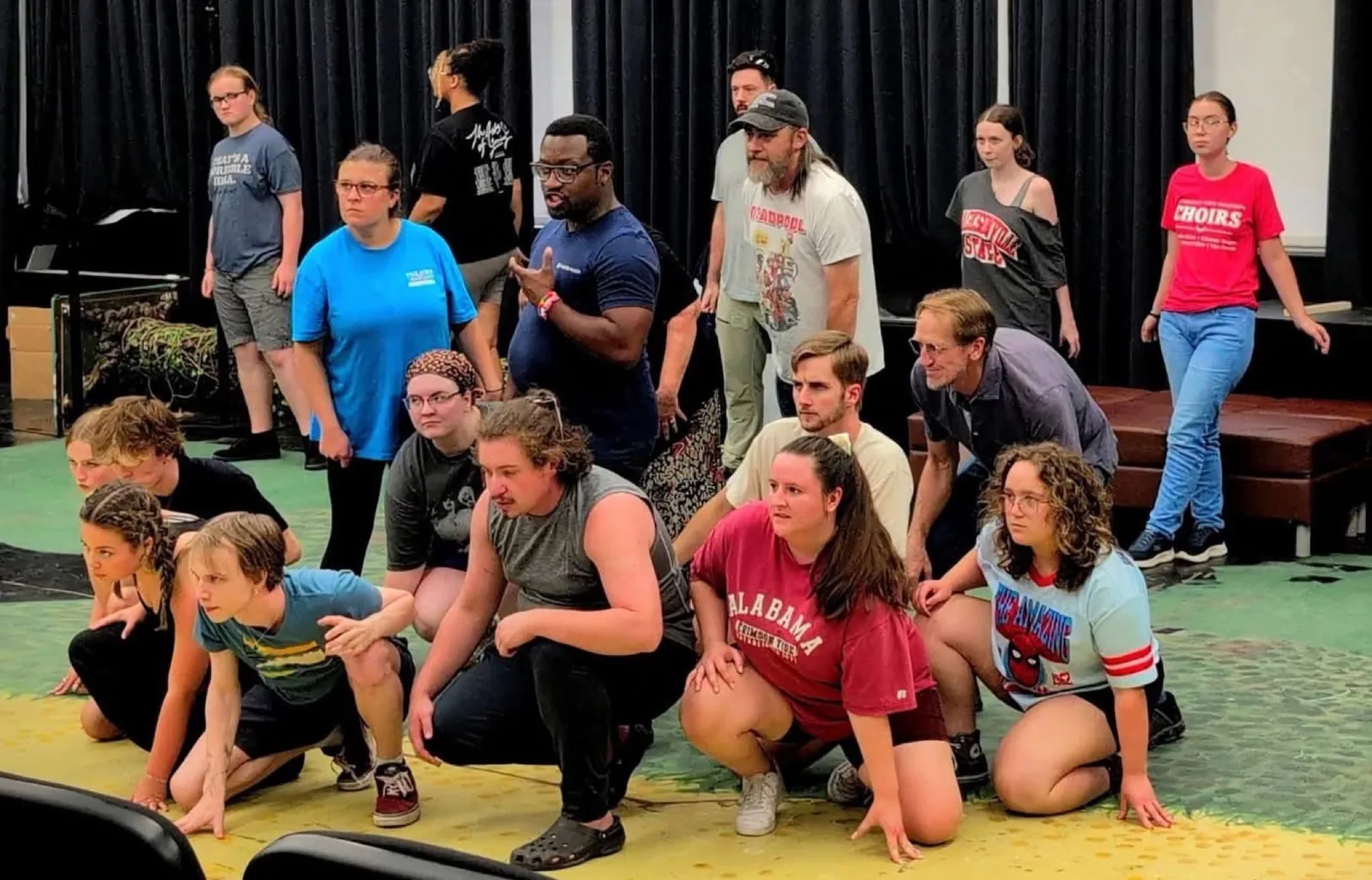

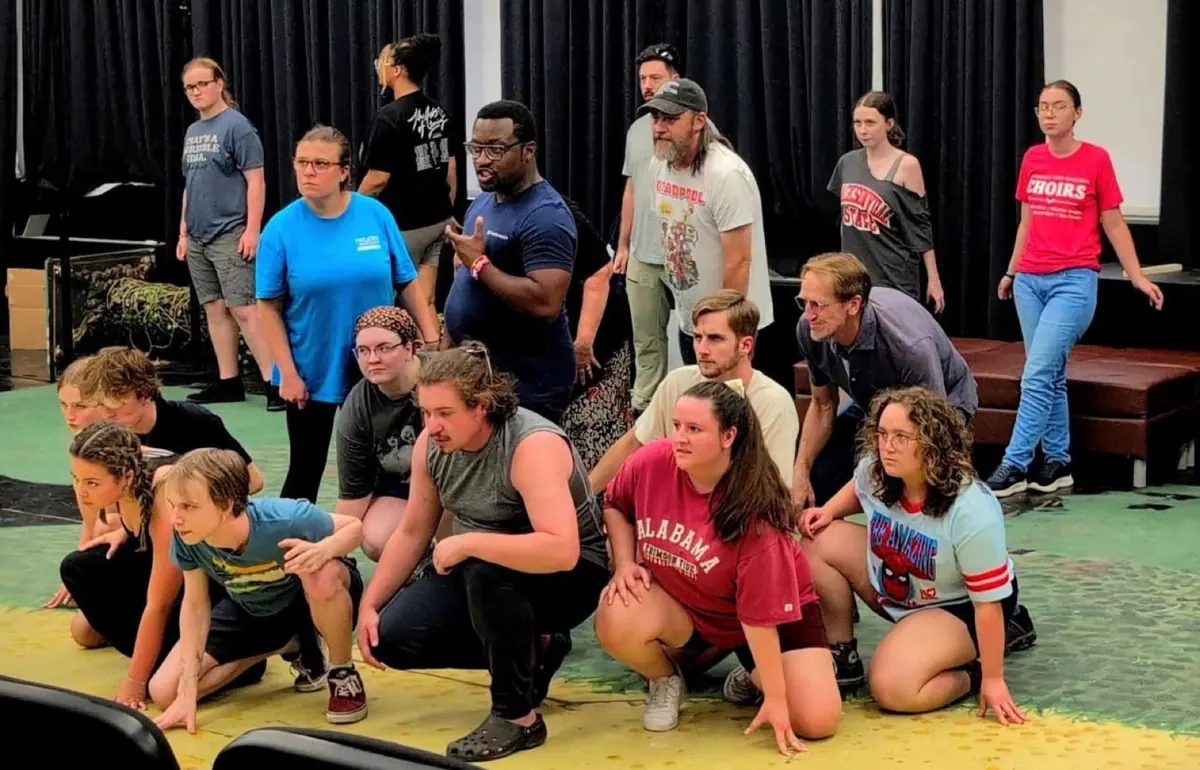
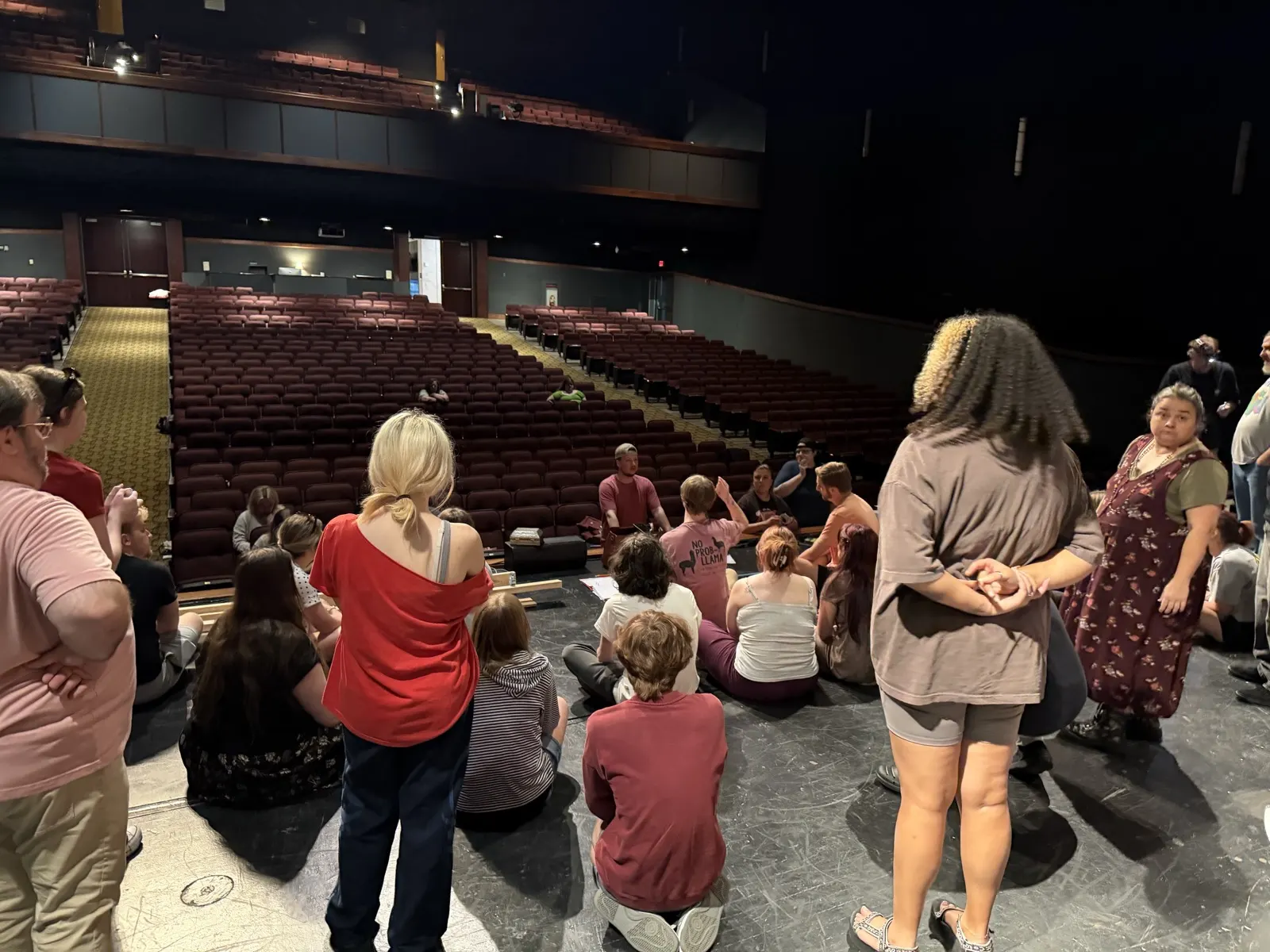
Seventy-four, maybe seventy-five people showed up to audition. Nobody in the room could land on the exact number, which tells you something. I was one of them. Jason Wright got Sweeney. I withdrew before the show — my family needed me home more than I needed to be back on a stage. I stand by what I said that night anyway: you could not cram so much talent into a room here in Gadsden. Somebody did.
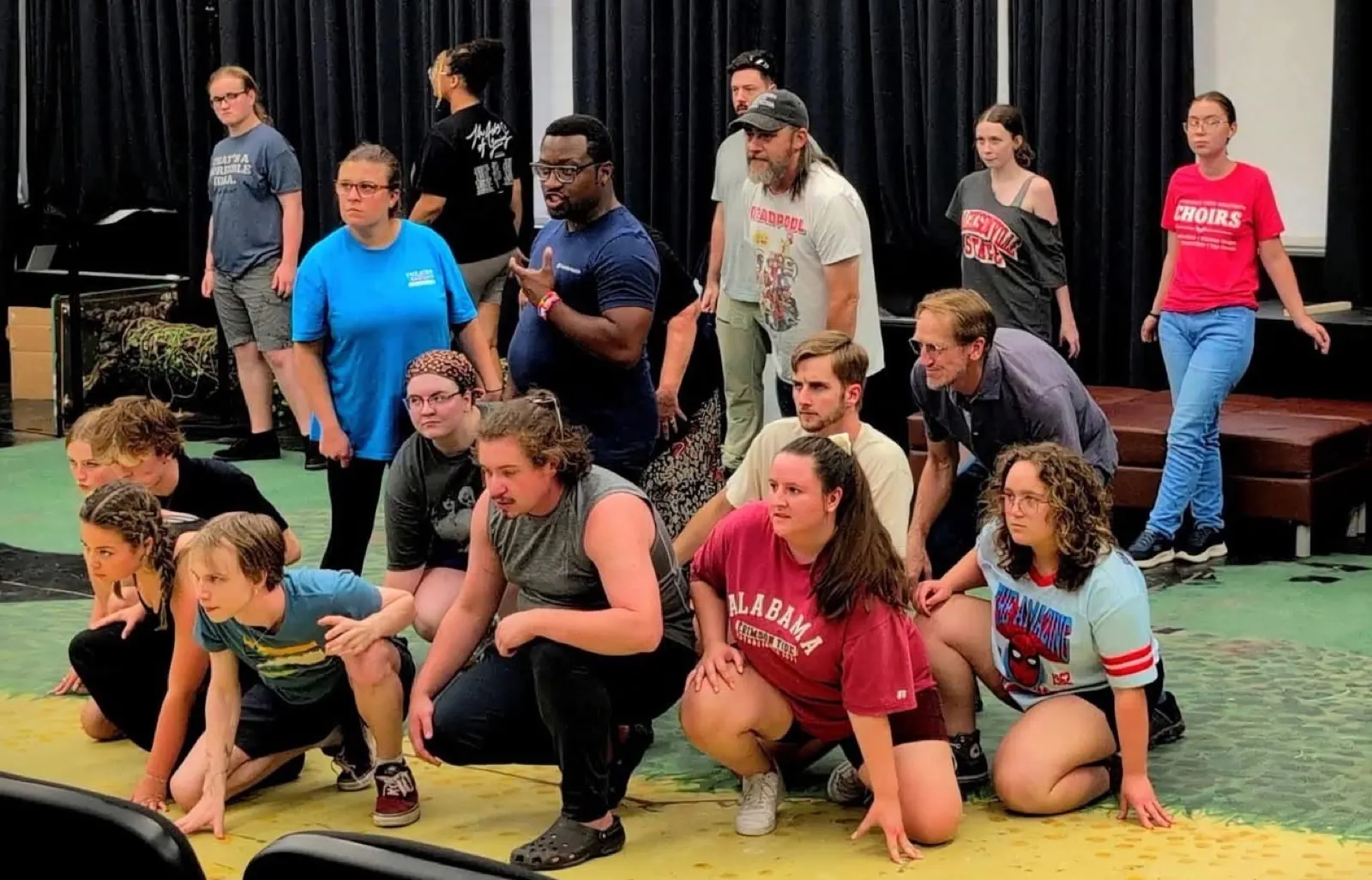
"I ended up overcasting it," Skylar admitted. "My limit was twenty-five, and after I casted what I wanted, it was like forty-eight." Even then he knew he had to go down again, and he did — after a few more cuts and a few drops, the final cast landed at thirty-six. Still eleven over his own limit, and that number does not include crew. He could not bring himself to send that much voice home.
That is the first thing you should know about this production. It did not have to be this big. Somebody decided it would be.
The man who wanted scale
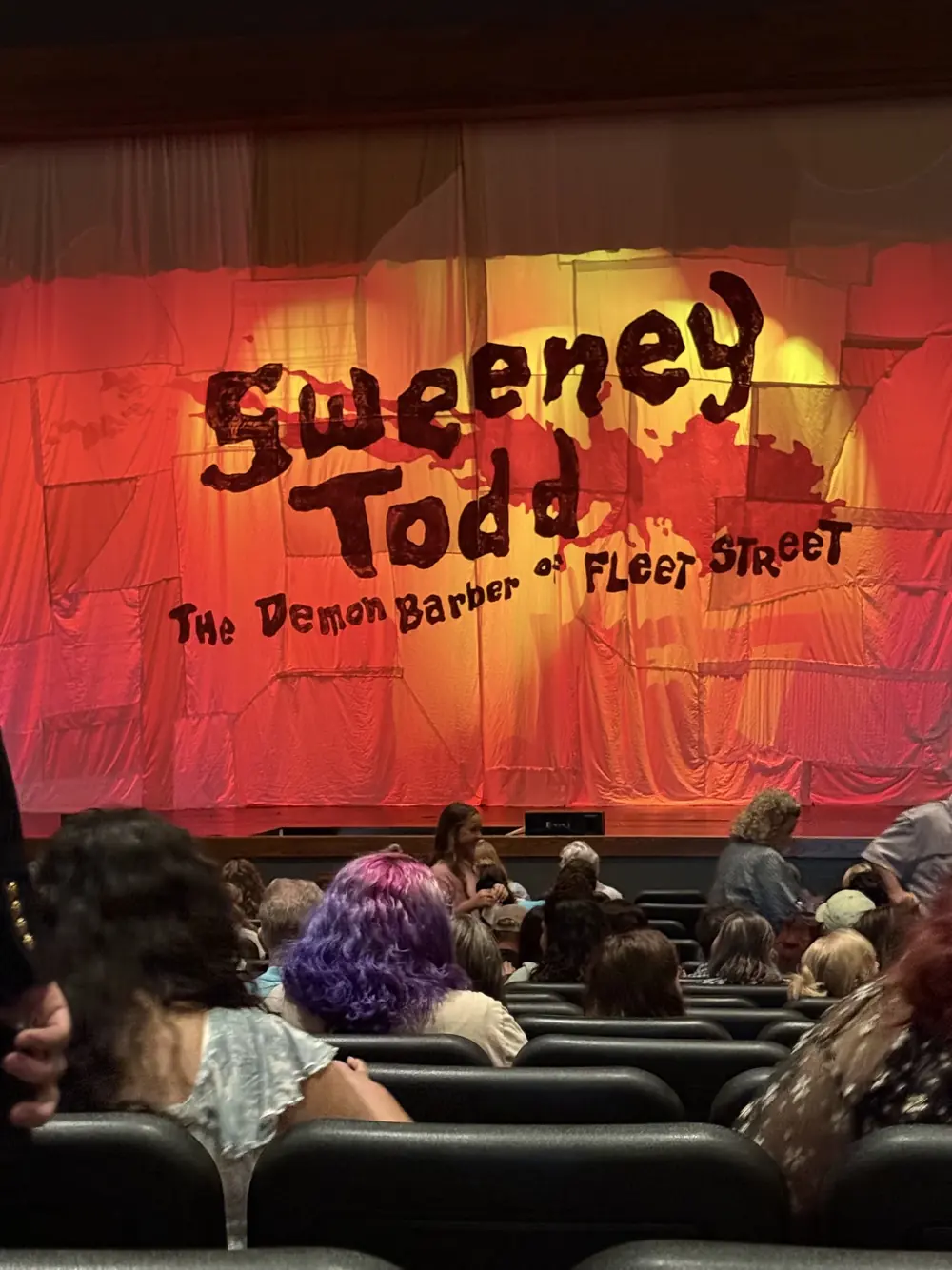
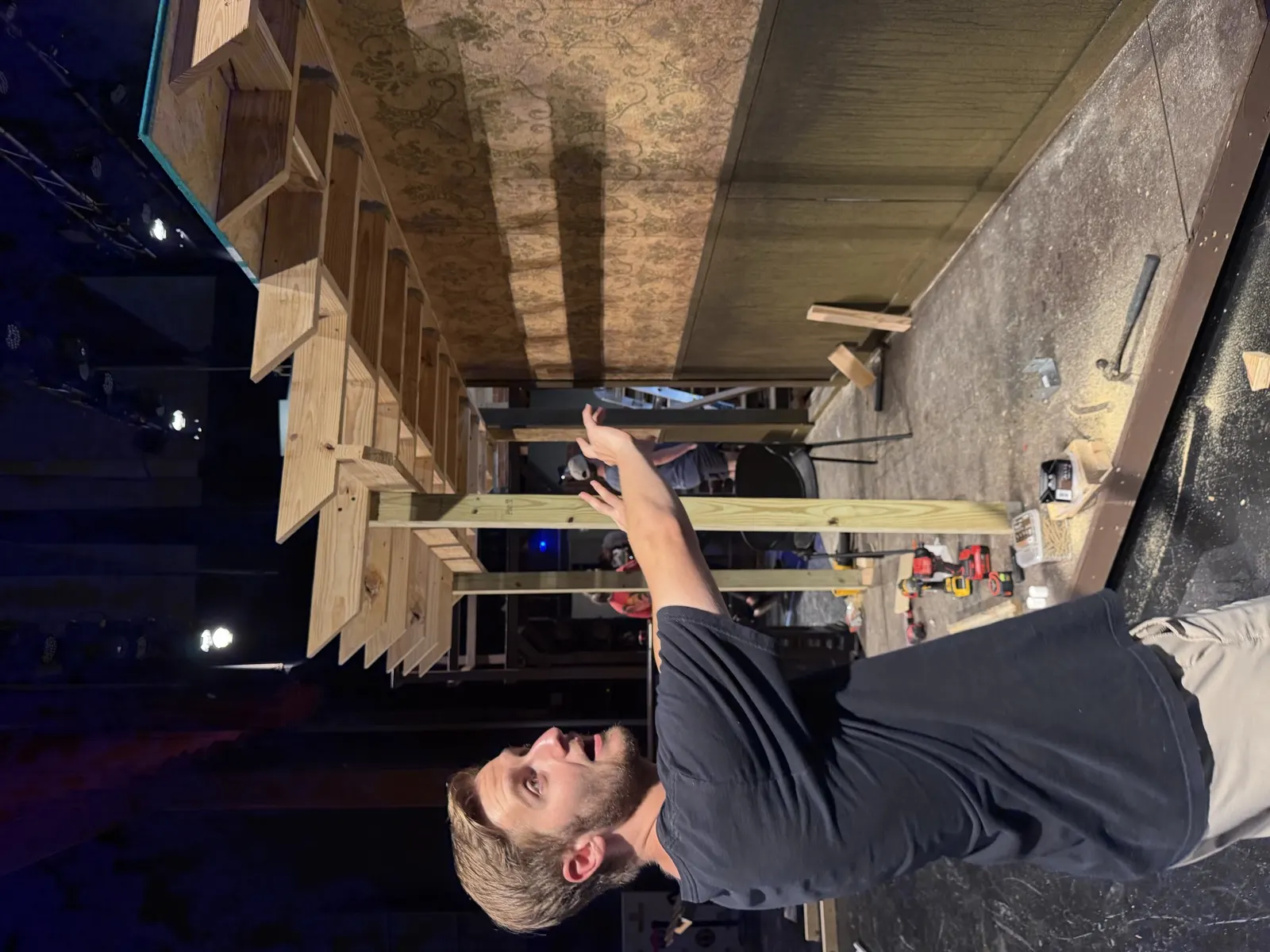
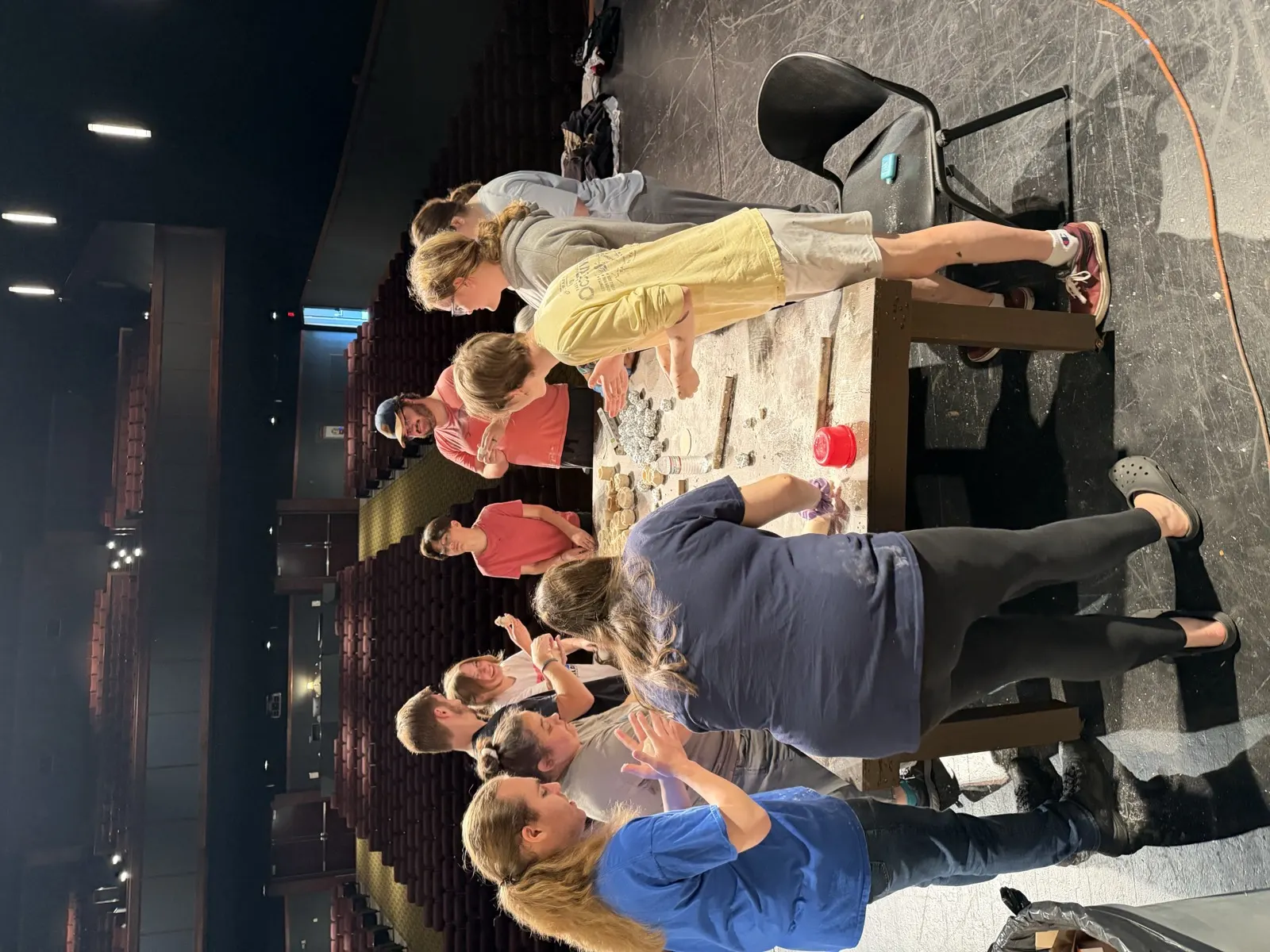
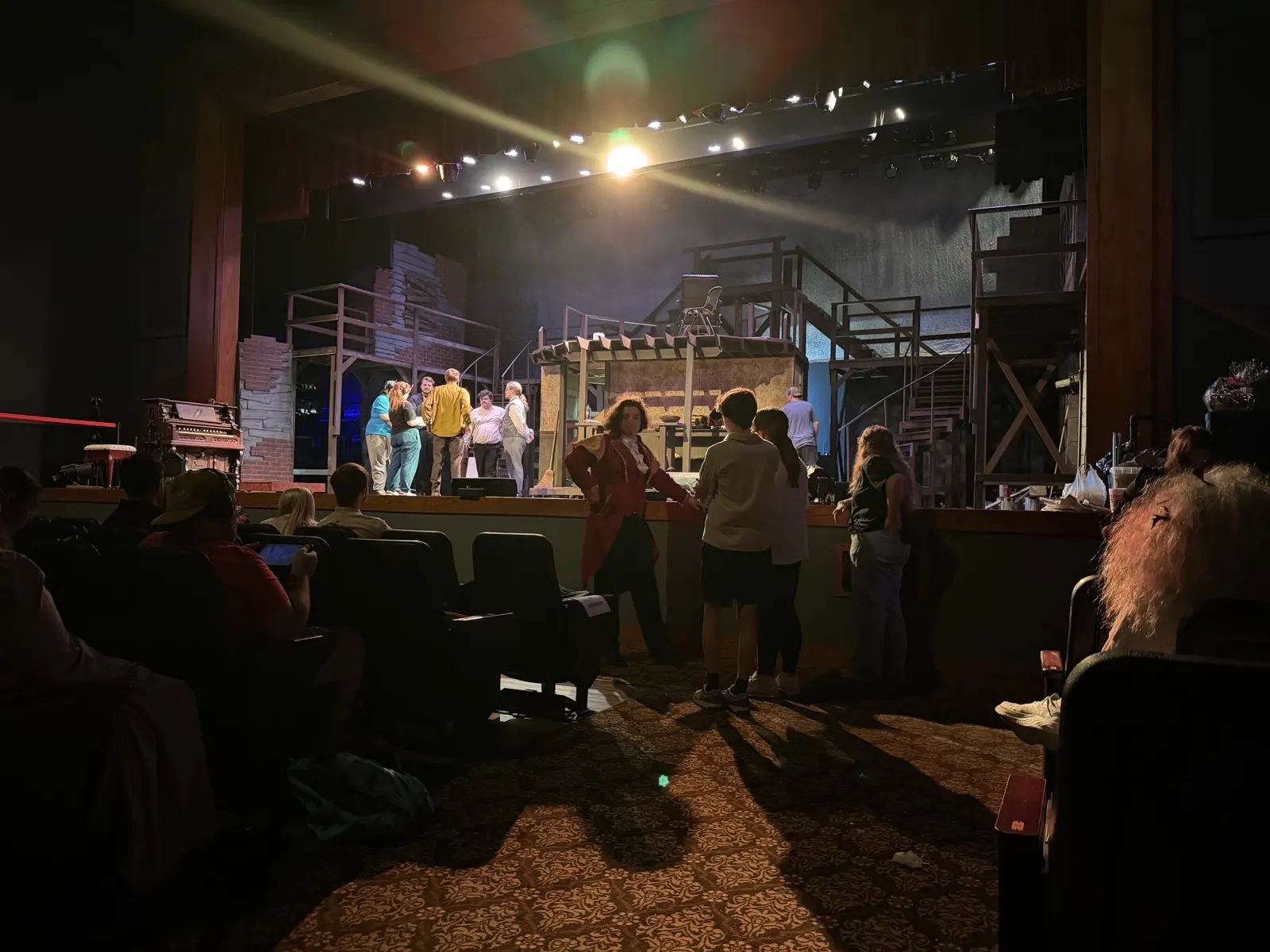
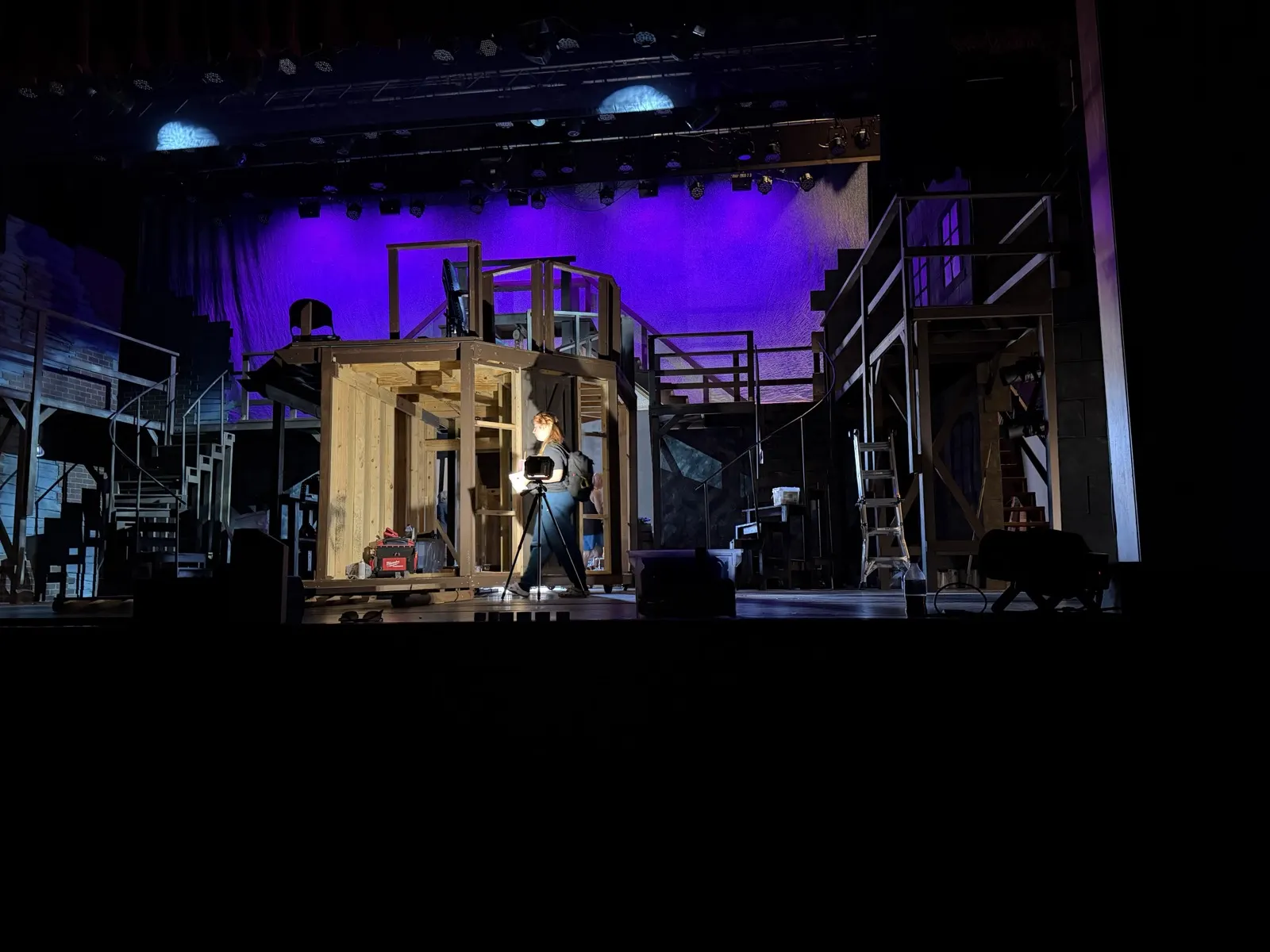
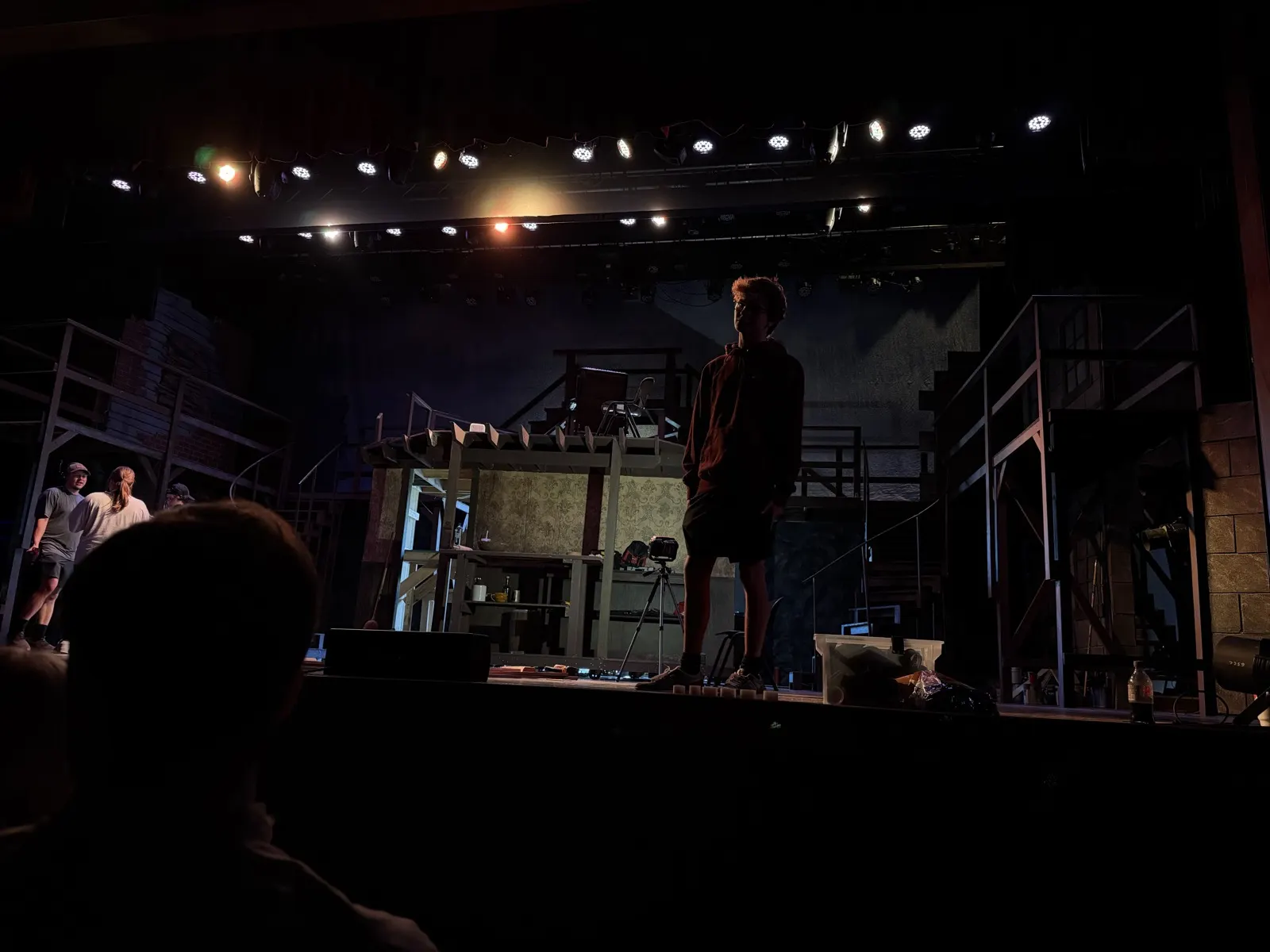
Skylar is the director, though he is quick to hand the credit sideways. When I told him the set was fantastic — and it is, a decaying grandeur that reads like Gone with the Wind left out in the weather — he corrected me before I finished the sentence. "It's better to say I helped. Michael took the brunt of that. Michael and Joe. I've been at work a lot." The Michael is Michael Copeland, a builder behind many of CharACTers' larger-scale productions, including Les Misérables; the Joe is Joe Fuselli, his assistant director. "Joe and Michael both have been extremely instrumental in making the magic happen," Skylar said.
But the vision is his, and the vision is not small. There is a classic way to stage Sweeney Todd: a spare rectangular box that rotates. Skylar knows that box. He was in this show fifteen years ago, in this same town, playing Pirelli on a turning stage. He could have reached for the safe version.
"When I decided to take the reins, I just wanted scale," he told me. "I wanted something huge and impactful, because I knew I had the talent that was huge and impactful." He said the word standard the way a man says a thing he is a little afraid to want out loud. Not a standard he was setting, he insisted — one he was reaching back toward, the standard of the big shows this community used to mount. Les Misérables. The ones you remember for years.

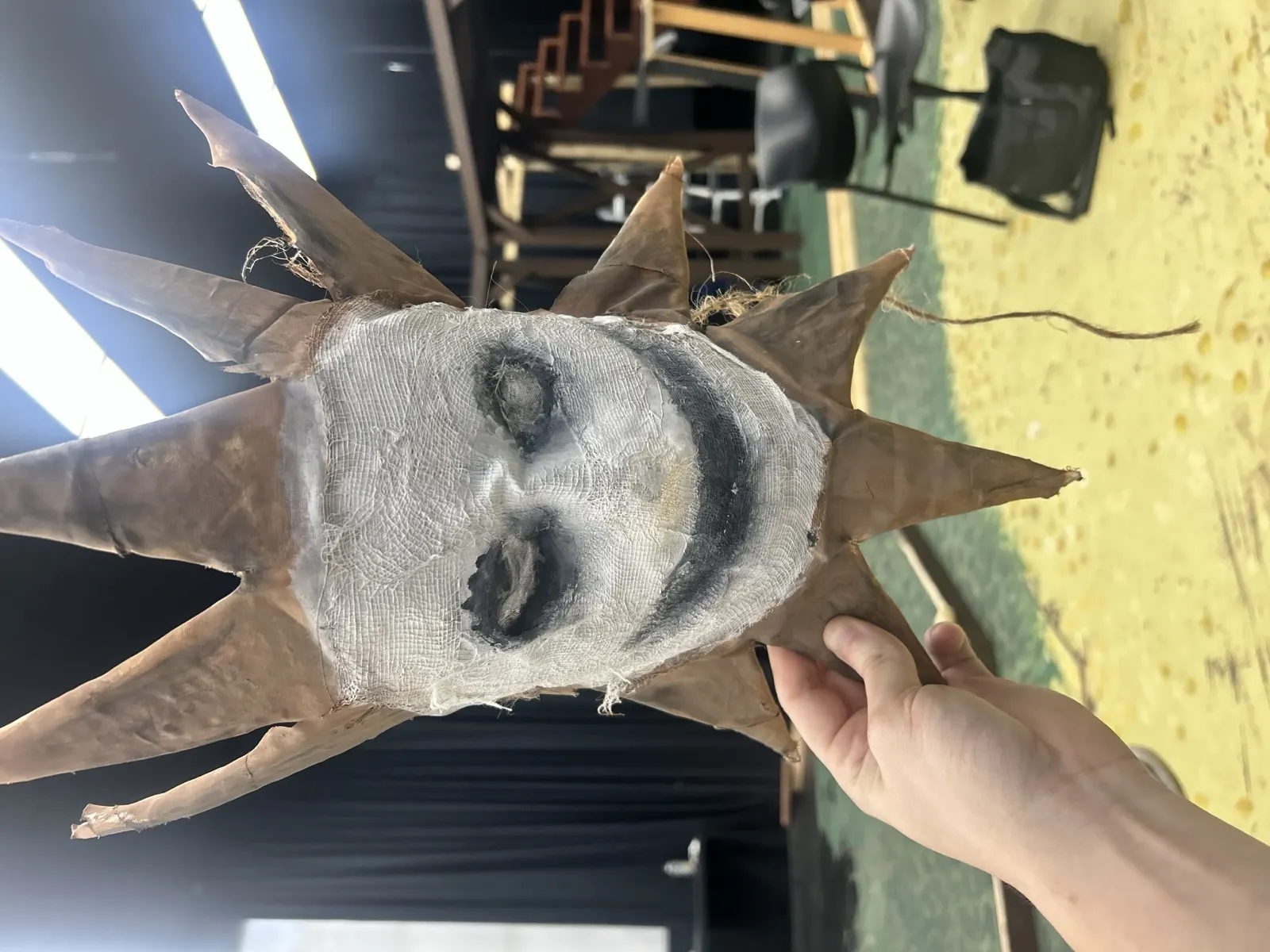
He gave the whole production a private theme and worked it into the costumes, the choreography, the set. He calls it beauty decaying. Every character on that stage was beautiful once, or is beautiful still, and in every one of them the decay has set in. "You could apply that theme to almost any situation," he said, "and still be able to find how that is true for each character."

The dark and hungry god
The reason I wanted to write about this show is not the razor. It is a question Skylar has carried for fifteen years and only recently answered for himself.
Sweeney Todd says, in one of its darkest lines, that its barber serves a dark and a vengeful god, and later, that he is a dark and hungry god himself. When Skylar first stood inside this show as a younger man, the line snagged him. "I was like, which god are they talking about? Maybe it's just some named false god." It is never named. So he sat with it, and the answer he came to is the whole sermon.
"I think the dark and vengeful god he is serving is himself," Skylar said. "He chooses self over everything else."
The dark and vengeful god he is serving is himself.
He is careful about the difference between vengeance and revenge. Sweeney is not, in the end, avenging anyone but Sweeney, Skylar argues — and the proof is the daughter. "He even says goodbye to his daughter without even making plans to reconcile with her after he kills the judge. There's none of that. It's all just, goodbye, Johanna, and these are my plans. It's very self-serving. This is what I want. This is what I need to get my own satisfaction." Then he said the sentence that made me put my pen down. "I think there are parallels to that in what we do in our own actions, in our own lives — obviously maybe not to that extreme." This is a man of faith directing one of the most violent things ever set to music, and he is not flinching and he is not sanitizing. Fifteen years ago, at circle — the gathering before a show — his director then, a man named Cody, prayed a prayer that has stuck with Skylar ever since: Lord, I pray you somehow get glory out of all this debauchery. He has thought about it more than once while directing this one.
"I don't think darkness necessarily exists," he said. "Darkness is just the absence of light. You can't bring darkness into a room. You can only bring light into a room."



The man I did not beat
Jason Wright is playing Sweeney.
I should tell you plainly that I auditioned for this show, that I have known Jason for twenty years, and that watching him step into a role I once carried is a complicated and mostly good thing to feel. I have written elsewhere about the envy and the relief and the grace of it, so I will not relitigate my own small drama here. I will only say that the room made the right call, and that I know it because of how Jason talks about the part.
He struggled with "Epiphany," Sweeney's great unraveling aria — not the notes, the meaning. "This is like a salvation moment for him. He's kind of lost his humanity. He's had everything stripped from him and taken away. And he sort of unifies with something divine that's past human — to me, like a god of vengeance."
Jason is the theater director at Piedmont High School, and half the young people in this cast came up under him. Dax Denton, nineteen, playing Toby; Gracie Bangs as Johanna; Jojo Parris as Anthony; Grayson, Jake — kids he first put on a stage now standing on one beside him. I asked what that was like and he gave me the truest answer anybody gave me all night.
"It's just like teaching with my students. Every time I get to be in a show with them, it kind of reminds me of why I do this." He turned the phrase over, finding the better version of it. "You get gifted more people to love."
You get gifted more people to love.
The mouthpiece and the maestro
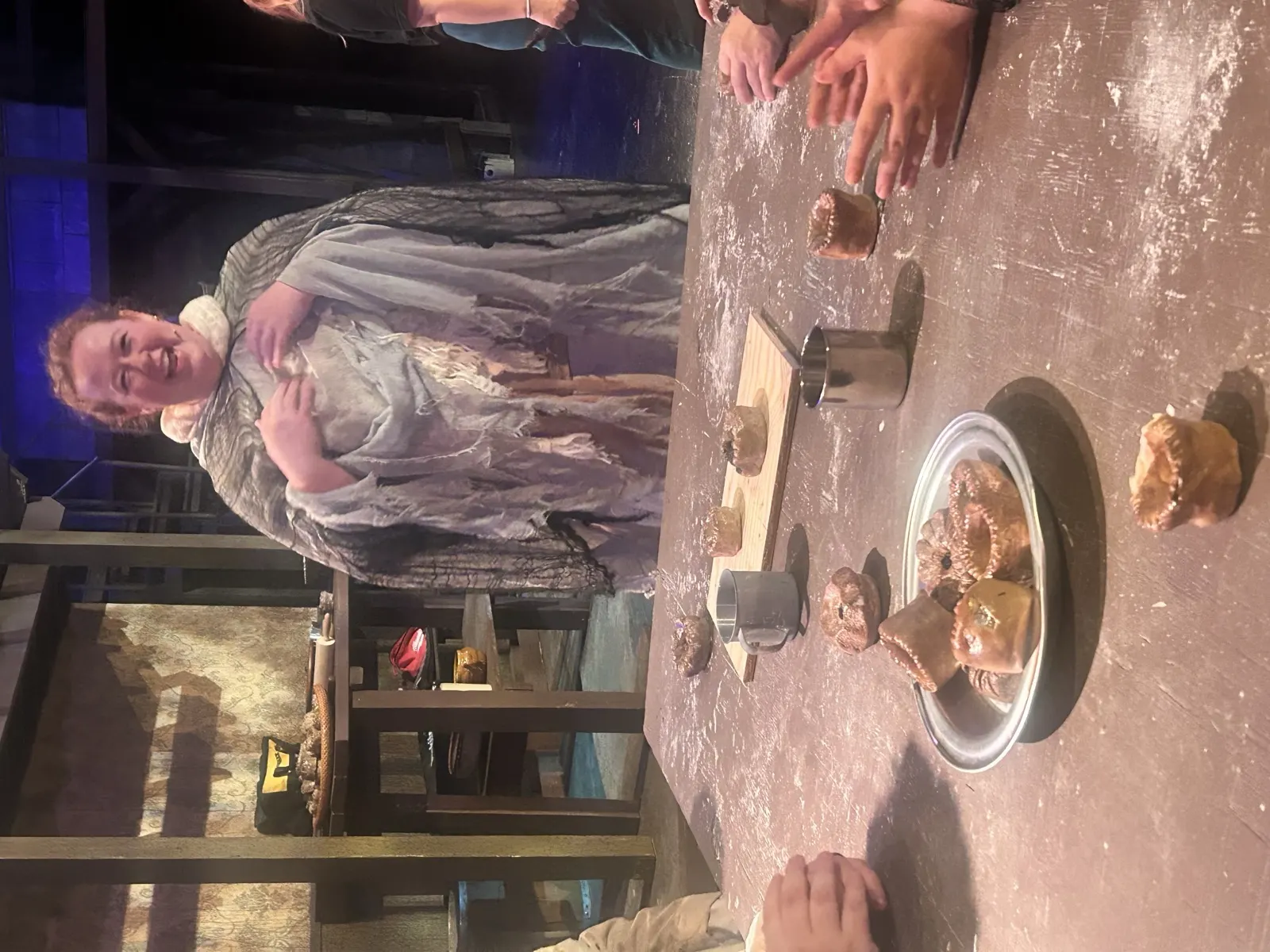
Amanda Hunter's Mrs. Lovett does all the talking — and Amanda knows it. "The show is called Sweeney Todd, but Mrs. Lovett does all of the talking. She's the mouthpiece to his stoicism." The hard part is not the avalanche of words, though there is that. It is the woman underneath them. "She wants to do anything to please him. She'll do anything to make him hers." Amanda has been chasing the nuance in a character who never slows down.
Then there is Silas Tankersley, the music director, conducting Sondheim for the first time. He hears the score as a set of arguments carried by the soloists — "Sweeney kind of represents selfishness, and Johanna represents purity, and Anthony represents hope." He is honest about how strange the music is. "Sometimes the best thing you can do is not try to make sense of it and just do it." Strip away what is harsh, he said, and what is left is a very lush, very thick, contrasting score. "It's humbling to be able to lead it."
Make room for the dark
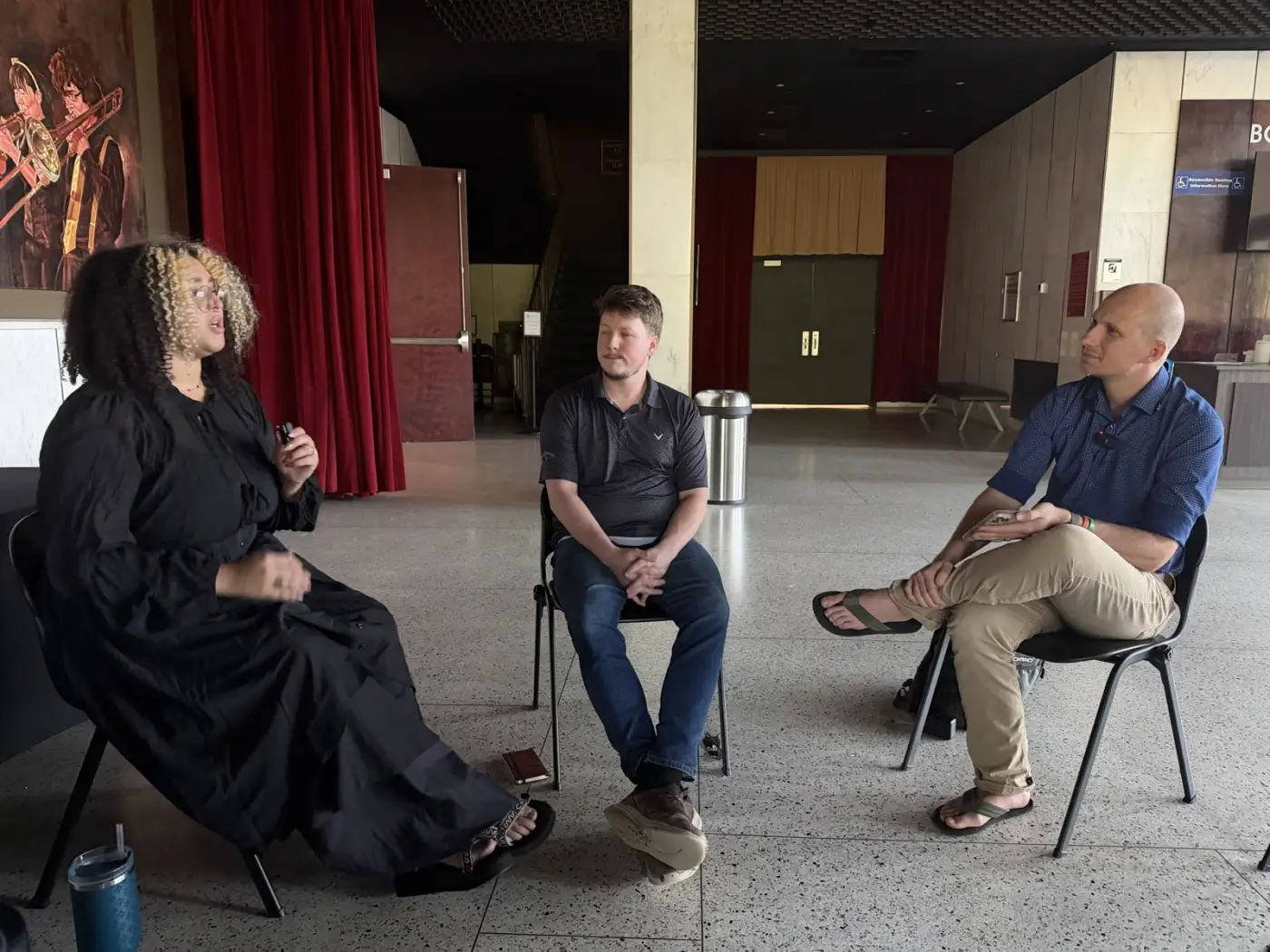
Near the end, standing in a hall that smelled like sawdust and fresh paint, we got honest about why any of us make a thing like this.
Amanda said the oldest true thing about light: you cannot know it without the dark to walk away from. "If it was all one or the other, there would be no contrast. You would never know your way to the light, because there's nothing to walk away from." The whole show, she said, is a mirror and a warning. "Who hasn't told a lie before? Who hasn't manipulated someone before? You see little pieces of yourself in these characters — and you also say, oh, but that's wrong. It's a morality tale."
They are making room for the dark on that stage in Gadsden — a room full of beautiful, decaying people telling the truth about a man who chose himself and called it a god. When the lights come up, some of us will see the razor. A few of us, if Skylar has done what he set out to do, will see the mirror.

Skylar wanted one last thing on the record, and it doubles as a thesis for the whole enterprise. "None of this would be possible without the dedication of each individual," he said. "Art is subjective — people have many different opinions of what art is. But one thing art is not is lazy."
Art is subjective. But one thing art is not is lazy.
I played this part once, before I understood it. These folks understand it. Go watch them.
A version of the reporting in this story also appears in the Anniston Star.
The production, in pictures


















Responses